

Why Waterproof Safety Shoes Belong on Every Worker's Feet
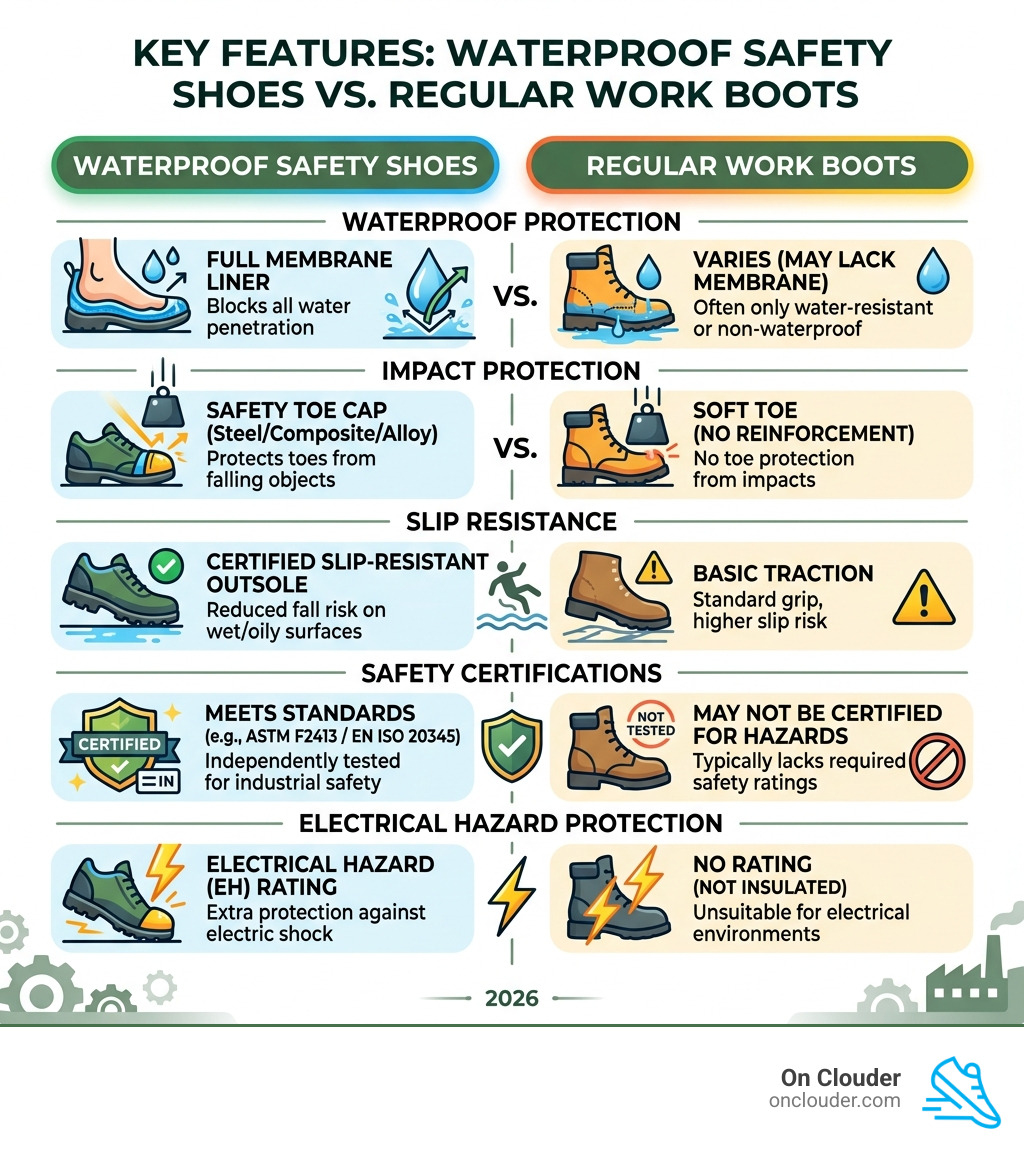
Waterproof safety shoes are protective footwear that keep your feet dry and shielded from workplace hazards at the same time. Here's a quick breakdown of what they offer:
| Feature | What It Means for You |
|---|---|
| Waterproof membrane | Blocks water from entering the shoe |
| Safety toe (steel, composite, or alloy) | Protects toes from heavy falling objects |
| Slip-resistant outsole | Reduces risk of falls on wet surfaces |
| Electrical hazard (EH) rating | Adds protection against electric shock |
| Safety certifications (ASTM / EN ISO) | Confirms the shoe meets tested safety standards |
Wet floors, muddy job sites, and unpredictable weather are daily realities for millions of workers. Regular work boots can handle some of that — but they lack the certified protection that hazardous environments demand. Waterproof safety shoes close that gap by combining industrial-grade protection with moisture barriers built into the construction of the shoe itself.
Whether you're on a construction site, in a warehouse, or working in oil and gas, the right pair can mean the difference between a safe shift and a serious injury.
I'm Faisal S. Chughtai, a footwear expert with a deep focus on comfort and performance across all types of protective footwear, including waterproof safety shoes. I'll walk you through everything you need to know to find the right pair for your work environment.
Essential Safety Certifications for Waterproof Safety Shoes
When we talk about waterproof safety shoes, we aren't just talking about keeping your socks dry. We are talking about a piece of personal protective equipment (PPE). To ensure a shoe actually does what the manufacturer claims, it must pass rigorous testing to meet specific global standards.
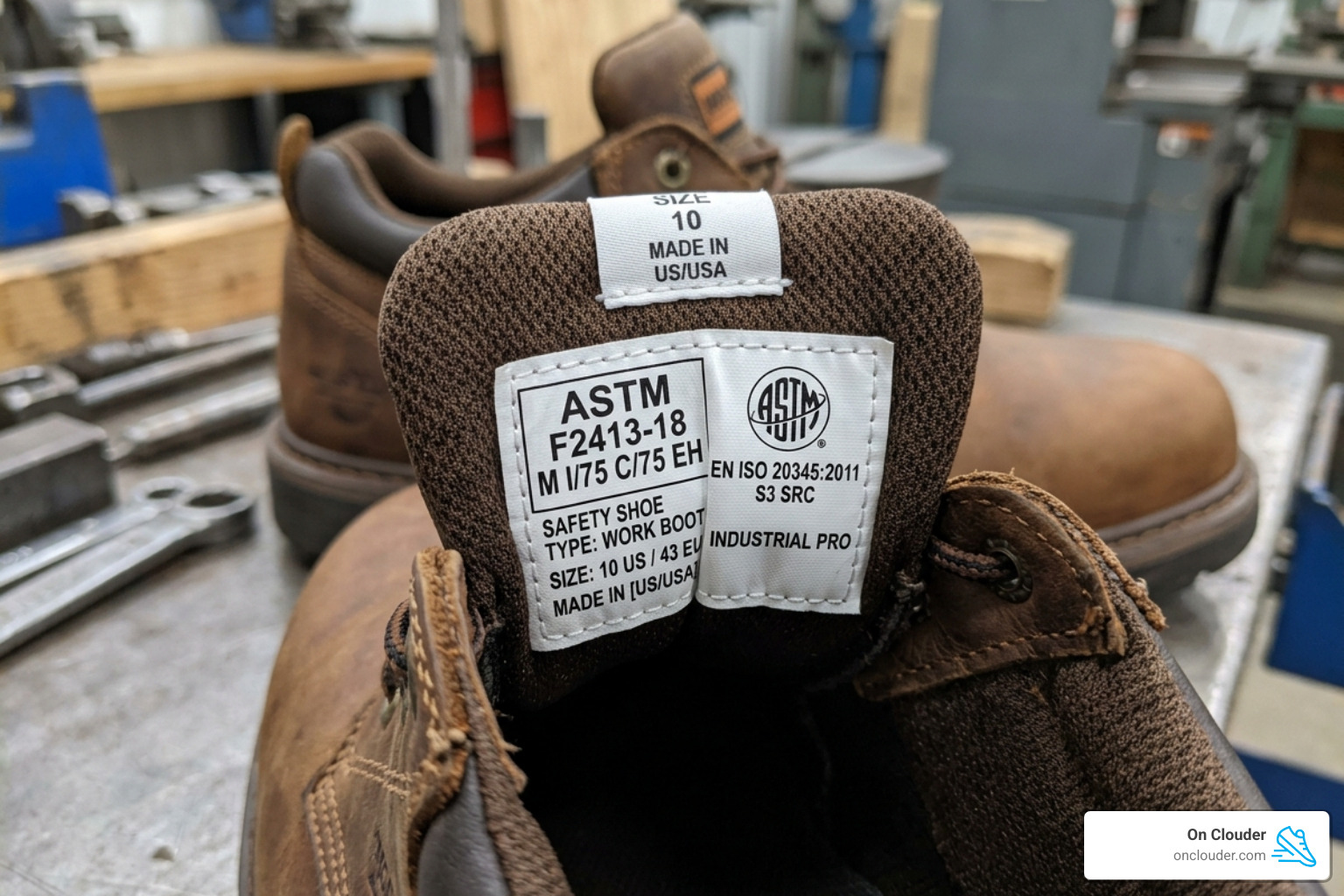
ASTM F2413 and EN ISO 20345
In the United States, the gold standard is ASTM F2413. This certification covers the minimum requirements for performance for footwear to provide protection against a variety of workplace hazards. If you see this label, it means the shoe has been tested for impact resistance (falling objects) and compression resistance (rolling objects).
Across the pond and in many international markets, you’ll see EN ISO 20345. This is the European standard for safety footwear. Modern high-spec models, like the X430eh - Waterproof Safety Shoes With EH Protection | Safety Jogger, often meet both the latest EN ISO 20345:2022 and ASTM F2413:2024 standards. This dual certification gives us peace of mind that the shoe performs at an elite level globally.
Electrical Hazard (EH) and CSA Grade 1
Another critical rating is Electrical Hazard (EH). EH-rated shoes are designed with non-conductive, electrical shock-resistant soles and heels. They act as a secondary source of protection to reduce the potential of electric shock under dry conditions. For our friends in Canada, look for the CSA Grade 1 certification, which often includes a green triangle patch indicating heavy industrial toe protection and a puncture-resistant sole.
Key Features of High-Performance Safety Footwear
Choosing the right waterproof safety shoes involves more than just checking the "waterproof" box. We need to look at the "under the hood" technology that keeps us upright and injury-free.
Slip and Puncture Resistance
Wet environments are naturally slippery. To combat this, high-quality safety shoes use specialized rubber compounds and tread patterns. Some outsoles are tested specifically on ceramic tile with sodium lauryl sulfate (SRA) or steel floors with glycerol (SRB). When a shoe passes both, it earns the SRC slip resistance rating—the highest level available.
Puncture resistance is equally vital on construction sites where stray nails are a constant threat. While traditional boots used steel plates, many modern waterproof safety shoes utilize woven textile midsoles. These are lighter, more flexible, and cover 100% of the foot's bottom surface, unlike some steel plates.
Heat Resistance and Specialized Protection
For those working in paving, welding, or heavy industry, HRO (Heat Resistant Outsole) ratings are a lifesaver. Some outsoles, like those found on the Brnr XP | Red Wing, can resist melting at temperatures up to 475°F (246°C).
We also see an increase in metatarsal guards. While a safety toe protects your digits, a metatarsal guard protects the delicate bones on the top of your foot. Modern versions like ForceShield™ are thin and flexible, only hardening upon impact to maintain comfort during daily wear. For a deep dive into how modern tech is changing the game, check out the-modern-sentinel-a-comprehensive-review-of-the-mjythf-rotating-button-safety-shoes/.
Toe Protection Types in Waterproof Safety Shoes
The "safety" in waterproof safety shoes usually comes down to the toe cap. You have three primary choices:
- Steel Toes: The classic choice. They offer the thinnest profile and the highest level of protection for the lowest cost. However, they conduct heat and cold and can trigger metal detectors.
- Composite Toes: Made from carbon fiber, plastic, or fiberglass. These are 100% metal-free (great for security checkpoints) and don't conduct temperature. They are typically thicker than steel.
- Aluminum/Alloy Toes: These provide a lightweight alternative to steel while maintaining a slim profile.
Additional Protective Technologies
Beyond the basics, we often look for insulation. If you're working in a cold-storage warehouse or outdoors in winter, non-insulated boots won't cut it. Insulation is usually measured in grams:
- 200g: Good for active work in cool temperatures.
- 400g - 600g: Necessary for frigid conditions or sedentary work in the cold.
Brands like Wolverine often integrate these layers with moisture-wicking linings to ensure that while water stays out, sweat can actually escape.
Comfort, Breathability, and All-Day Wear
Let’s be honest: a shoe isn't "safe" if it’s so uncomfortable that you’re distracted or constantly taking it off. At On Clouder, we prioritize the "all-day wear" factor.
The 3-Layer Waterproofing System
The most effective waterproof safety shoes don't just rely on a coating; they use a system. This often includes:
- Moisture-wicking linings that pull sweat away from the skin.
- Cushioning foam for comfort.
- A waterproof bootie/membrane (like GORE-TEX or proprietary versions) that acts as a one-way street—letting vapor out but blocking liquid from coming in.
We've explored similar technology in our on-cloud-waterproof-review-are-they-actually-worth-the-extra-30/ article. While that review focuses on running, the principle remains the same: a quality membrane is worth the investment for anyone working near water.
Weight and Shock Absorption
Heavy boots lead to leg fatigue. This is why we're seeing a massive shift toward "athletic-style" waterproof safety shoes. Brands are now using EVA midsoles (the stuff in your running shoes) and PU (polyurethane) footbeds to provide shock absorption. This is particularly important if you are standing on concrete all day. For those who prefer a lighter feel, exploring tag/waterproof-sneakers/ can provide some great safety-adjacent options for lighter duty.
Maintenance and Sizing for Longevity
Buying a pair of high-end waterproof safety shoes is an investment. Prices can range from $100 for entry-level models to over $350 for heavy-duty, USA-assembled boots. To get your money's worth, you need to understand both fit and care.
| Brand Segment | Price Range | Standout Features |
|---|---|---|
| Value (e.g., DEWALT, CAT) | $80 - $160 | Steel toes, nubuck leather, solid EH ratings |
| Mid-Range (e.g., Reebok, Irish Setter) | $130 - $220 | Athletic designs, composite toes, BOA systems |
| Premium (e.g., Red Wing, Royer) | $220 - $380+ | GORE-TEX, Vibram soles, resoleable construction |
Finding the Right Fit
Safety shoes should never require a "break-in" period that involves pain. Because the safety toe does not stretch, getting the width right is crucial. Many premium brands offer widths ranging from B Narrow to H Wide. If your toes feel pinched in a standard "D" width, always opt for the "EE" or Wide version.
Maintaining Your Waterproof Safety Shoes for Longevity
To keep your boots performing, follow these four steps:
- Clean: Use warm water and a soft brush to remove mud and salt after every shift. Dried mud can actually suck the moisture out of leather, causing it to crack.
- Condition: For leather boots, apply a conditioner like mink oil or all-natural leather cream. This keeps the leather supple and maintains its natural water resistance.
- Protect: Use a silicone-free waterproof protector spray. This creates an invisible barrier that helps water bead off the surface rather than soaking into the outer material.
- Resole: If you've invested in a high-quality "welted" boot, don't throw it away when the sole wears down. Many premium manufacturers offer repair services to replace the outsole, effectively doubling the life of the shoe.
Frequently Asked Questions about Waterproof Safety Footwear
What is the difference between waterproof and water-resistant safety shoes?
Water-resistant shoes are usually treated with a coating (DWR) that repels light rain or splashes. However, if you step in a puddle or work in a downpour, they will eventually leak. Waterproof safety shoes feature an internal membrane and sealed seams that create a total barrier against liquid, even when submerged.
How often should I re-apply waterproofing treatment to my work boots?
It depends on your environment. If you work in heavy mud or chemicals daily, we recommend a light cleaning and re-treatment every 2–4 weeks. For most workers, once every few months is sufficient to maintain the leather's health and the "beading" effect of the water.
Are composite toes as safe as steel toes in wet conditions?
Yes. Both must pass the exact same ASTM or EN ISO impact and compression tests. In fact, composite toes are often preferred in wet, cold environments because they don't get "ice cold" like steel does, keeping your feet warmer and more comfortable throughout the day.
Conclusion
At On Clouder, we know that the right footwear is the foundation of a productive workday. Waterproof safety shoes are no longer the clunky, heavy weights they used to be. With modern materials like composite toes, breathable membranes, and high-rebound foams, you can find a pair that feels as good at hour twelve as it did at hour one.
Whether you're looking for the heavy-duty protection of a Red Wing SuperSole or the athletic agility of a Reebok Work sneaker, prioritizing the certifications (ASTM/EN ISO) and the fit will ensure your feet stay dry, safe, and comfortable.
For more in-depth performance rankings and guides on the best footwear for demanding jobs, stay tuned to our latest reviews. If your job keeps you on your feet for long shifts, don't miss our ultimate guide to standing on concrete. Stay safe out there!
